Many households already contain objects that hold a young child’s attention during brief periods. A basic rotation keeps these items accessible without creating extra purchases or storage demands. The approach centres on watching what the child reaches for repeatedly and adjusting the selection accordingly. Caregivers can begin by listing everyday items that remain clean and intact, then test them in short sessions to see which ones sustain interest over several minutes. This method reduces clutter while preserving opportunities for repeated handling and simple exploration suited to children from birth to three years.
Before setting up any rotation, note the child’s current movement patterns and preferred actions without attaching timelines or expectations. Infants who remain seated with support may turn objects over or listen to sounds, whereas toddlers who pull to stand often test balance by stacking or rolling items. These observations guide the choice of three or four objects at a time. The process stays practical when sessions last only until the child loses interest, after which items return to storage to keep the area clear for other household uses.
Selecting Items That Match Observed Interests
Walk through each room once and list five to seven objects already in daily use. Wooden spoons, metal bowls, fabric scraps and cardboard tubes frequently appear in these lists because they offer varied textures and weights without requiring purchase. Choose only items that are clean, intact and free of small detachable parts. Test each one briefly by placing it within reach and noting whether the child picks it up or ignores it after a minute or two. Discard any item that shows wear such as splinters or loose stitching before including it in the rotation.
Limit the initial selection to objects that support simple actions like grasping, turning or sliding rather than complex assemblies. A single fabric square can be folded or draped, while a sturdy cardboard tube allows rolling or peering through. Keep the total to three or four items so the child can focus on one or two without distraction. Reassess after two sessions by removing anything that consistently stays untouched. This keeps the set manageable and prevents accumulation of unused pieces around the home.
Checking Items for Everyday Suitability
Before each session, examine every object for damage that could appear during ordinary use. Run a finger along edges to detect rough spots, and shake items gently to confirm nothing rattles loose. Items stored in kitchens or bathrooms may carry residue, so wipe them with a damp cloth and allow them to dry fully. Avoid anything that has been near cleaning products or food waste, even if it looks clean at first glance.
Store selected objects in a single container that stays out of reach until the play period begins. A fabric bag or small basket works well because it can be carried easily between rooms. Label the container with a simple note listing the current items so any caregiver can verify the contents quickly. Replace an item immediately if it becomes soiled or damaged during use, rather than waiting until the next scheduled rotation. This habit maintains safety without interrupting the flow of daily routines.
Arranging a Low, Stable Play Spot
Clear a small floor area away from main walkways. A washable mat or folded blanket defines the boundary without adding new furniture. Position the spot near a seated adult so supervision remains straightforward during the session. Ensure the surface underneath stays level and free from gaps that could trap small fingers or toes. Move any nearby furniture with sharp corners or unstable legs before placing items down.
Check the floor surface for hazards each time. Wipe away crumbs or small debris before placing items down. Keep the area free of trailing cords or loose rugs that could shift under movement. If the household uses multiple rooms for care, prepare two possible spots in advance so the rotation can continue even when one area is occupied by other tasks. Return the mat or blanket to storage once the session ends to restore the space for its usual purpose.
Observing What Holds Attention
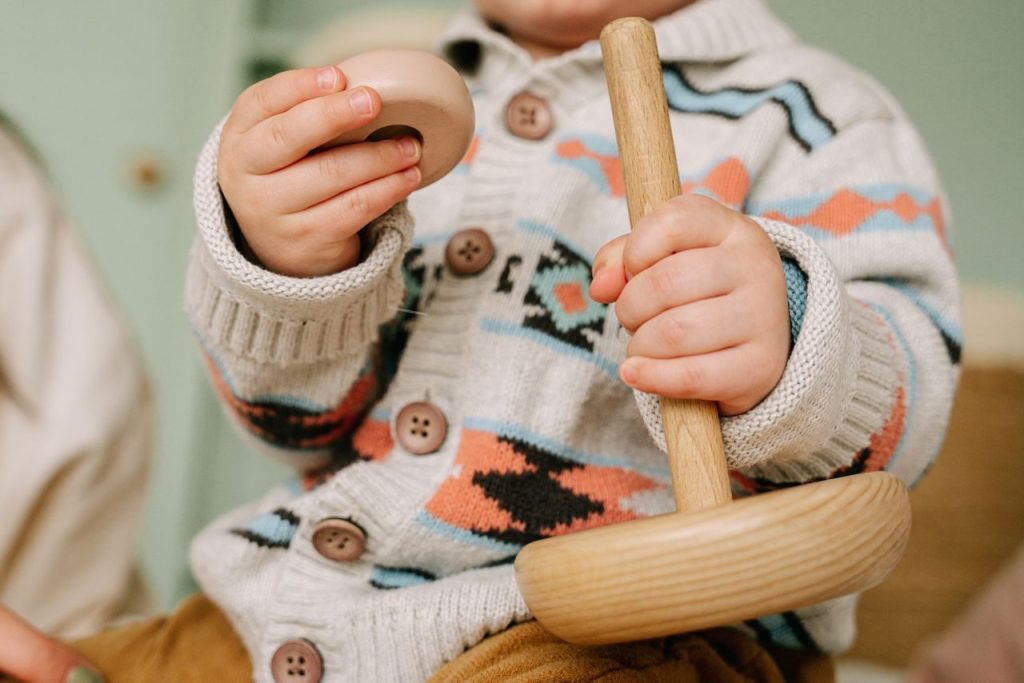
Sit nearby and note which object the child returns to most often. Duration of engagement matters more than the number of items touched. A single bowl that is turned over repeatedly provides more information than several untouched toys. Record the sequence of actions, such as mouthing followed by banging, to understand how the object is being explored at that moment. Avoid intervening unless safety requires it, allowing the child to direct the pace.
Write brief notes after the session ends. Record the time of day, the objects used and any simple actions such as banging or rolling. These notes help decide what to keep in the next rotation and what to set aside. Compare notes across two or three sessions before making changes, because interest can vary with tiredness or hunger. If an item receives no attention after repeated exposure, remove it without assuming the reason and try a different household object in its place.
Rotating Items Every Few Days
Remove one object and introduce one new household item after two or three sessions. This gradual change prevents sudden loss of familiar items while still refreshing the selection. Store unused objects out of sight but within easy reach for later use. Introduce replacements only from the original household list to maintain consistency in texture and size. Avoid adding more than one new item at a time so any shift in engagement can be linked to a specific change.

Keep the rotation small. Five items total across the week is usually enough for children under three. Larger collections tend to scatter and become harder to monitor during short play periods. When an item reappears in play after a short absence, it can remain in the active set for another cycle. Track which objects cycle back naturally by marking them on the storage note. This record prevents unnecessary replacement of items that continue to hold interest over several weeks.
Adjusting the Setup for Different Times of Day
Light levels and background noise affect how long a child stays engaged. Morning sessions may suit brighter corners, while afternoon play works better in quieter areas. Test one change at a time and observe the result over two sessions. Move the play spot only after confirming that the new location keeps the child visible from the usual adult seating position. Adjust the number of items downward if the child appears distracted by surrounding activity.
End each session by returning items to their storage place. This habit keeps the play spot ready for the next use and reduces the chance of objects migrating into sleep or feeding areas. If a session occurs near mealtime, shorten the play period and clear the space earlier to avoid overlap with preparation tasks. Keep a spare clean cloth nearby so any item that becomes damp during play can be wiped and dried before storage.
Sharing the Rotation Between Caregivers
Leave a short written list of the current items and their usual location. Include the time of day that has worked best so far. New caregivers can then continue the same rotation without starting from scratch. Update the list whenever an item changes so the information stays accurate. Place the note in a consistent spot, such as inside the storage container lid, for quick reference during handovers.
Review the list together at handover. Confirm which objects remain suitable and whether any have been set aside. This quick step maintains consistency across different adults without requiring long discussions. If a caregiver notices an item no longer holds attention, they can note it for the next review rather than removing it immediately. Over one week, reassess the entire rotation by checking which items still appear in play and replacing only those that receive no attention after several sessions.
After several weeks the same core objects may continue to appear in different combinations. When this happens, reduce the rotation to four items and observe whether engagement remains steady. The method works best when changes stay small and based on direct observation rather than external schedules.