Notes can preserve a question
Developmental notes are useful when they help adults describe how a child plays, communicates and moves over time. They become less useful when every entry is treated as a mark in a competition. CDC guidance distinguishes everyday developmental monitoring from screening performed with validated tools by trained people. A home record can support a conversation, but it is not a diagnosis and does not tell a family what conclusion must follow from one observed action or missed opportunity.
Start with a question you actually have. Perhaps you want to remember how the child asks for help or what another carer noticed during play. A dated sentence can be enough. You do not need to document every minute or copy a large chart. A record should make information easier to recall, not turn ordinary time together into repeated tests whose only purpose is to produce a reassuring entry before the next comparison with somebody else's child.
Use three simple columns
A practical note can separate date and setting, observation, and question. For example, the setting might be shared book time, followed by a description of what the child did and a question you would like to discuss. Label illustrative examples clearly and keep them separate from actual observations about the child. The structure helps distinguish an action from your interpretation. A phrase such as seemed frustrated can be expanded into the visible behaviour you actually noticed, rather than used as a complete explanation.
Record the source when information comes from another adult. Their observation may be valuable, but it is different from your own memory. If a detail is approximate, mark it that way. Accuracy does not require artificial precision. A child-health professional can ask follow-up questions when something remains uncertain. A neatly filled chart with guessed times and meanings may be harder to use than several plain notes that honestly identify what is known and what was not observed directly.
Keep the activity ordinary
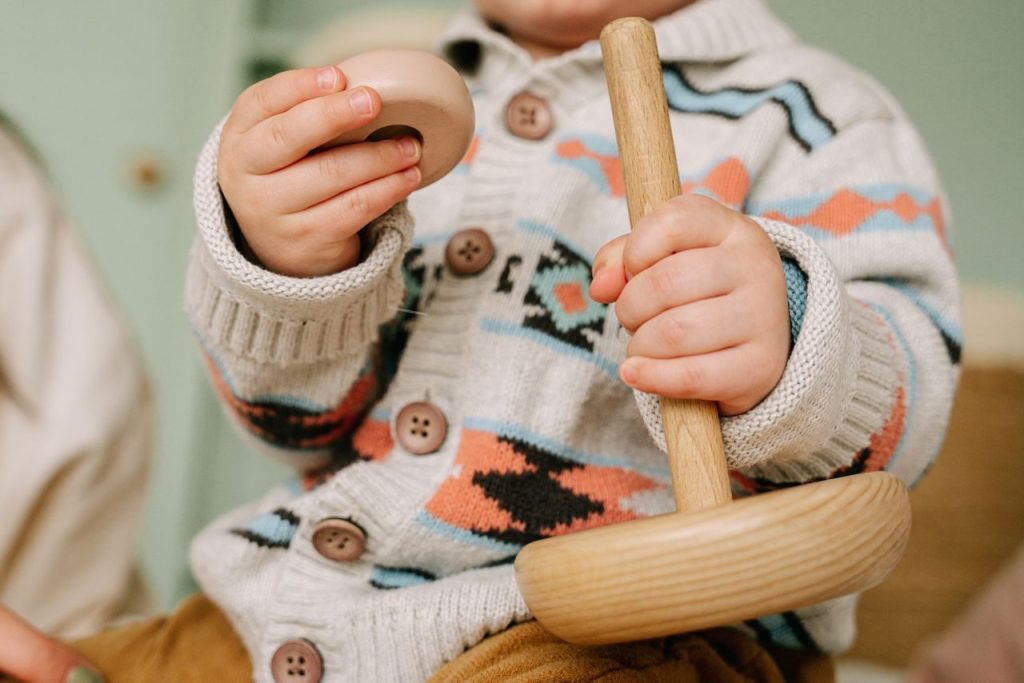
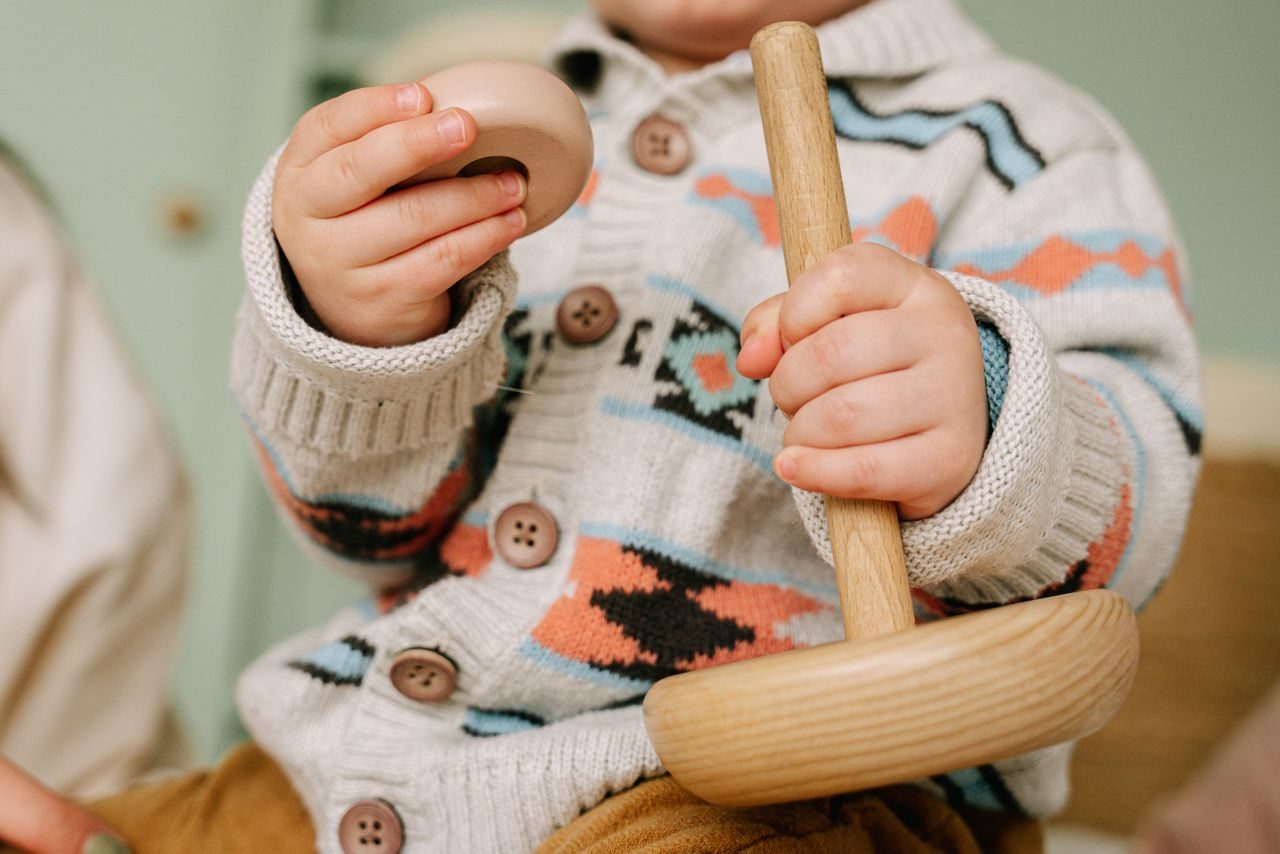
Play, read and talk in ways that fit the child and setting. You can notice an action without asking the child to repeat it until the record looks complete. Repeated testing can change the situation and place unnecessary pressure on both adults and child. A moment that did not happen on request is not the same as evidence that a skill is absent. Likewise, one action does not establish a broad judgement about the child's development, temperament or future learning.
Keep other sources in context. A video, checklist or social-media story may prompt a question, but it does not supply a full comparison. Children in public posts appear in selected moments. Your own notes also show only part of everyday life. Useful monitoring preserves that limitation instead of pretending every entry is an objective score. If a particular concern keeps returning, bring it to an appropriate professional rather than seeking enough similar examples online to decide the issue yourself.
Share observations through a clear route
At a planned conversation, identify the main concern and show the relevant notes. You can ask how monitoring and screening differ, whether further assessment is appropriate and where to raise later questions. If you notice a loss of skills or have a developmental concern, discuss it promptly with a qualified child-health professional. You do not need to finish a perfect diary or prove a diagnosis before asking. The purpose of the conversation is to clarify, not judge the quality of your record-keeping.
If several carers contribute, agree what will be shared and how. Keep personal details proportionate and use an appropriate private channel. A public parenting group does not need a child's complete history to suggest a general source. Avoid making a teacher, relative or childcare worker guess whether a note is a clinical instruction. Label observations as observations and preserve existing professional guidance separately, so the same file does not mix questions, interpretations and actual care directions into one confusing list.
Review the method as well as the content
Ask whether the notes help you remember or mostly make you worry about filling gaps. You can reduce their frequency and complexity while keeping important questions visible. A record is a tool, not a duty to maintain forever. If monitoring is taking over family time, discuss a more manageable approach with an appropriate professional. There is no requirement to capture every meaningful moment or turn every ordinary activity into evidence that a child is progressing at a particular rate.
The strongest notes remain modest: something happened, in a particular context, and it raised a question. They support attention without declaring certainty. Keep them accurate, private and connected to actual concerns. That leaves room for ordinary shared life and for professional screening or assessment when needed. Development is not a scoreboard, and thoughtful care is not measured by the number of charts a family completes or how confidently they can compare one child's path with another's selected story.
Further reading: CDC: developmental monitoring and screening.