Many new caregivers wonder how to begin noticing what holds a young child’s attention without adding more toys to the home. Starting with items already present allows play to fit naturally into daily routines while keeping supervision straightforward. The approach relies on brief, repeated sessions that can be adjusted as the child’s movement and interests develop between birth and three years.
Observation works best when the focus stays on what the child actually does in the moment rather than expecting particular outcomes. This approach suits children from birth to three and can be adjusted as mobility and interests change. Caregivers can use existing household objects to create low-pressure opportunities for watching handling, reaching and repetition without introducing new products or complex setups.
Selecting a small number of safe items
Begin by choosing three or four objects that are already in regular use and free of small detachable parts. A wooden spoon, a fabric napkin or a plastic measuring cup often works for the youngest babies who are still lying on their back or tummy during awake periods. Check each item for intact labels, smooth surfaces and absence of loose threads or stickers before offering it. Items should be washed according to their care instructions and inspected for cracks or sharp edges every time they are brought out. This selection keeps the session manageable and reduces the chance of distraction from too many choices at once.
Common errors include selecting objects with peeling paint or small parts that could come loose during mouthing. Caregivers sometimes overlook fabric items that have become frayed after repeated washing. Applicable conditions are straightforward: the objects must match the manufacturer’s age guidance and remain dry and clean throughout the session. For babies under six months, items that can be held by the adult for gentle reaching are suitable, while older infants who sit unsupported may manage items placed on a flat surface. Review each piece against the original packaging or instructions if available, and replace any item showing wear immediately rather than continuing with it.
Choosing a clear floor space
Clear a small area on the floor near where household tasks happen. A mat or clean blanket provides a defined boundary while still allowing the adult to remain within arm’s reach. Remove any nearby items that could roll away or pose a trip risk, such as loose cables or stacked laundry. The space needs to stay uncluttered so attention stays on the play objects rather than on surroundings. Measure the area roughly by the reach of the child when lying or sitting to avoid unnecessary stretching or leaning.
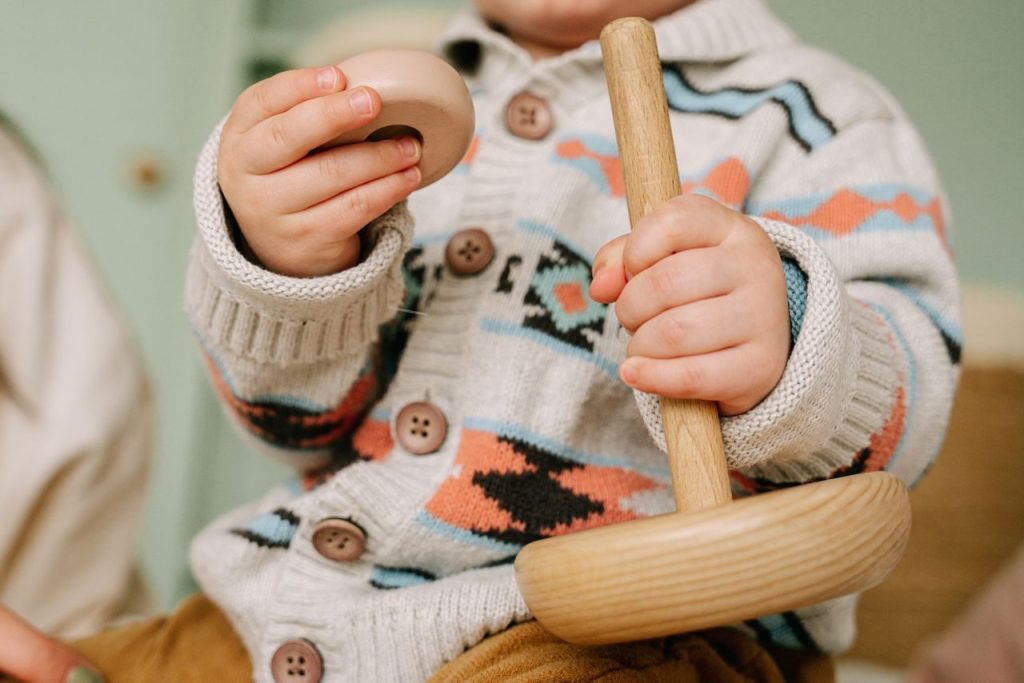
Position yourself so you can watch without constant intervention. This setup supports brief sessions that last only a few minutes at first. A frequent mistake is placing the space too close to doorways or high-traffic routes where interruptions occur. The arrangement works best when the floor surface is firm and level, with no cushions or soft underlays that could shift. Conditions for use include ensuring the area remains separate from food preparation zones to avoid cross-contamination of items. Regular checks of the floor for crumbs or small debris before each session prevent unintended hazards without requiring additional equipment.
Timing sessions around existing routines
Link short play moments to times when the child is already awake and alert, such as after a feed or during a pause in household chores. Sessions of five to ten minutes often suit babies under one, while toddlers may stay engaged a little longer depending on their current state. Avoid starting play when the child shows signs of tiredness or hunger, as this can shorten attention quickly. Ending while interest remains high helps the next session begin on a positive note. Repeat the same items across several days so patterns in handling become easier to notice over time.
Judging the right moment involves watching for steady breathing and relaxed posture rather than waiting for a fixed clock time. Common errors include extending sessions past visible signs of disengagement or scheduling play immediately before sleep times. The method applies when the caregiver can stay in the same room without competing tasks. For children approaching three years, sessions can occasionally extend if the child initiates repetition with the same object. Keep the timing flexible and stop at the first indication of frustration or distraction, returning items to storage until the next natural pause in the day.
Recording simple observations
Keep a small notebook or phone note with one or two lines per session. Note which item received the most handling and how the child used it, such as mouthing, shaking or passing between hands. Focus on actions rather than interpretations. Over several weeks these notes can show shifts in preference without turning into formal records. Record the time of day and duration only if it helps identify consistent patterns, otherwise limit entries to the objects and basic movements observed.
Applicable conditions require that notes remain private and are not shared beyond immediate caregivers. A frequent mistake is adding judgments about speed of learning or comparing one child to another. The practice works when entries stay brief and factual, such as “held spoon with both hands for two minutes.” Review notes weekly to decide whether to keep or swap an item, always basing changes on actual handling rather than external expectations. This method supports continuity when care is shared between adults without requiring detailed personal information.

Adjusting for different stages
Newborns often explore through touch and sound while lying down. Items that make a gentle rattle or have varied textures can be held by the adult for the baby to reach toward during short awake periods. Once sitting develops, place objects within reach so the child can grasp and release independently. Toddlers who walk may enjoy carrying an item from one spot to another within the cleared space. Change the height or position of items only when the child’s movement changes, rather than following a fixed schedule.
Judgment criteria include watching whether the child can maintain head control or steady sitting before raising items off the floor. Conditions for adjustment are based on observable posture and reach rather than age alone. Common errors involve introducing items that require standing or climbing before the child shows stable balance. Keep changes minimal, adding or removing one object at a time and observing the response over two or three sessions. This gradual approach maintains safety and allows the caregiver to confirm that the new arrangement still permits continuous supervision from a nearby position.
Keeping supervision continuous
Stay in the same room and glance frequently while the child plays. Adult presence allows quick removal of an item if it becomes wet, soiled or damaged during use. Never leave the play area unattended even for a short task elsewhere in the room. Supervision remains the main safety measure regardless of the objects chosen. If the child loses interest, simply put the items away until the next brief session rather than encouraging continuation through prompts or repositioning.
Conditions for effective supervision include having a clear line of sight and being able to reach the child within one or two steps. A typical error is assuming that a barrier or monitor replaces physical presence. The method applies during any household activity that can be paused, such as folding laundry or preparing a drink. When attention must shift momentarily, end the session and store the items. This consistent approach prevents situations where an object could be mouthed for too long or moved out of the defined space without notice.
Reviewing the setup regularly
Once a week, check that the chosen items still meet safety guidelines and that the floor space remains clear of hazards. Wipe surfaces and wash fabric items according to care labels. Remove any object that shows cracks or loose parts and replace it with another everyday item that meets the same criteria. This regular check keeps the play setup practical without requiring additional purchases or complex storage solutions.
Applicable conditions involve storing items in the same location after each session so they are easy to inspect together. Common mistakes include continuing with worn objects because they are familiar or skipping checks during busy periods. The review works best when performed at a consistent time, such as after a weekend, and includes verifying that the cleared floor area has not been encroached upon by other household items. Over time the habit of watching how a child handles familiar items becomes part of ordinary daily care rather than a separate activity, supporting steady observation without added equipment or extended planning.