Observe the activity before naming a need
When play feels repetitive or short, buying another product can seem like an immediate answer. First, watch what is happening in a familiar suitable activity. Which object attracts attention, what does the child do and where does the interaction become difficult? You are not conducting a test. A brief ordinary observation can reveal a practical issue, such as too many objects, an awkward location or an adult task repeatedly interrupting time together.
Describe rather than interpret. A note that the child returned to one page several times is more useful than declaring that they need a new learning category. Similarly, a short session does not prove a problem with attention. Keep the context: who was present, what else was happening and whether the child needed care. An observation should help you understand the activity, not turn an afternoon into a diagnosis or a comparison with a public video showing a carefully selected moment.
Follow one existing interest
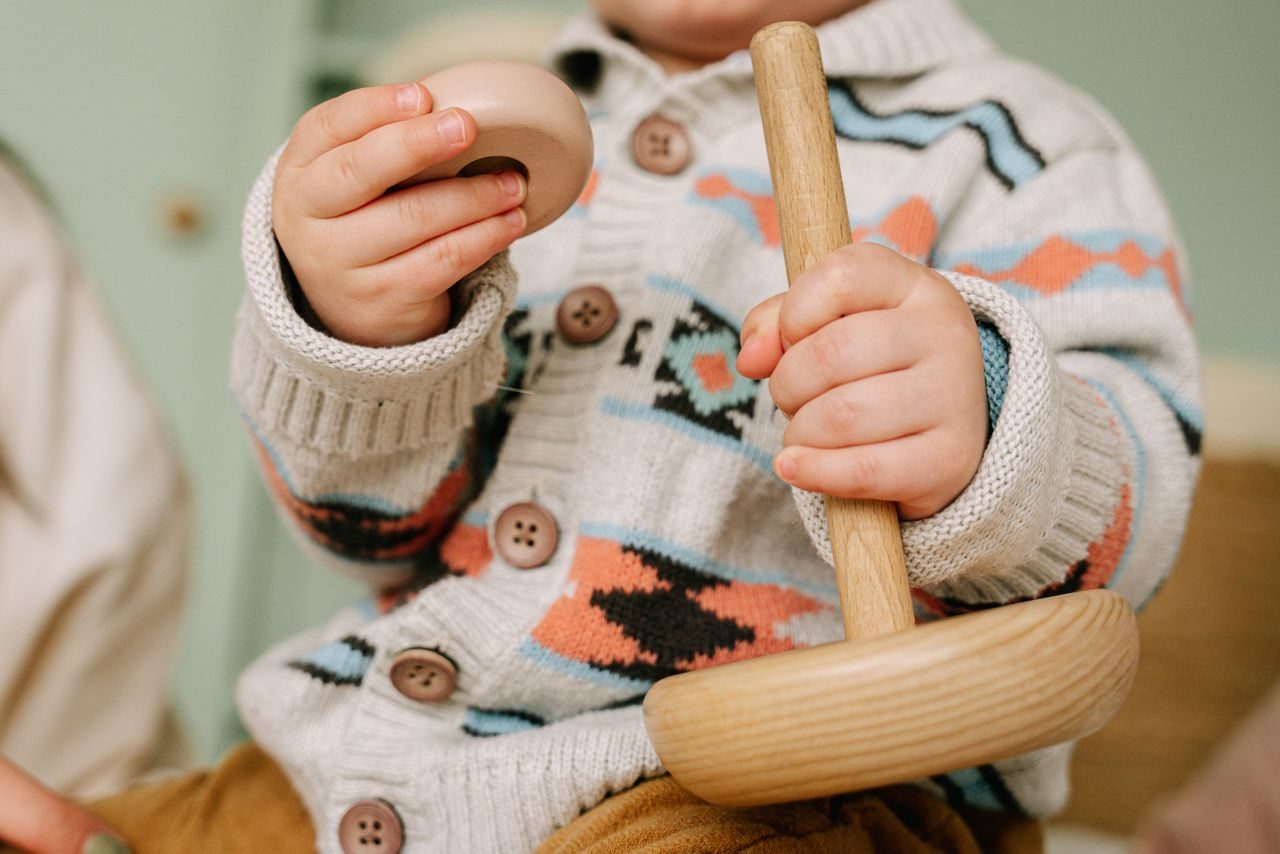
Use a suitable item already available and join what the child is doing. You might name a picture, copy an ordinary sound or pause for a response. If they move on, notice that too. The point is not to keep them in the activity for a target duration. A new purchase may add novelty, but it cannot replace responsive adult participation or determine what a child should be able to do at a particular stage based on marketing language alone.
Let the interaction remain simple enough to repeat. A book or toy need not be accompanied by a collection of homemade props. Extra materials introduce their own suitability questions. Keep small parts, cords and unrelated household objects separate. If you are using a product, its instructions and current condition matter even when the activity is familiar. This is a practical boundary around the observation, not an invitation to turn the child into the person who demonstrates whether an uncertain object is safe to keep using.
Look for logistical questions
Sometimes the problem is not the toy. Perhaps the room is busy, storage blocks access or several adults assume another person is supervising. Name that issue before choosing a product to solve it. A clearer handover or a smaller selection may help. If another adult joins, agree their role explicitly. You do not need a complete family redesign, but a practical conversation can stop the same interruption from recurring while everyone waits for a new object to make play easier on its own.
Consider adult workload as part of the setting. A carer managing several tasks may have limited uninterrupted attention. A toy advertised as independent does not remove supervision or make every household job compatible with the activity. You can plan a shorter shared moment and appropriate support rather than demand an ideal long session. This keeps the decision grounded in available time and care, instead of treating an adult's ordinary limits as proof that the child needs a more elaborate educational purchase.
Turn the observation into a buying question
If a real gap remains, describe its purpose clearly. You may want a suitable item with particular dimensions, care instructions or intended use. Compare specifications and actual terms without claiming a named product will produce a developmental result. Compare documented features and practical requirements rather than relying on a star rating without a clear explanation of what was assessed. You can read manufacturer information, ask questions and decide that the proposed item does not answer the need you observed, even if its description includes attractive promises about learning and progress.
Keep cost and storage visible too. A purchase adds not only a price but another object to clean, check and keep appropriately. If information is missing, mark it as a question rather than assuming it is favourable. Current prices and return conditions should come from the provider, not an old general review. The comparison can end without buying anything. That is a useful result when it prevents a product from being asked to solve an issue of space, communication or support it cannot address.
Keep developmental concerns on their own route
If you are worried about development or notice a loss of skills, discuss it promptly with a qualified child-health professional. A shopping observation cannot diagnose or rule out a concern. Preserve a few concrete examples and the questions they raise. You do not need to wait for the child to use a new toy before asking. Likewise, a favourite activity should not be used as reassurance that professional discussion is unnecessary when there is a genuine concern you have not yet clarified.
Watching first gives the purchase a clearer job, or shows that no purchase is needed. It also leaves room to enjoy ordinary play without demanding a measurable return. A familiar page, suitable toy and responsive exchange can be enough for the moment. Let the next decision reflect the actual situation, not the pressure to offer continuous novelty or prove that every minute together is advancing the child towards an advertised outcome.