Familiar does not mean designed for play
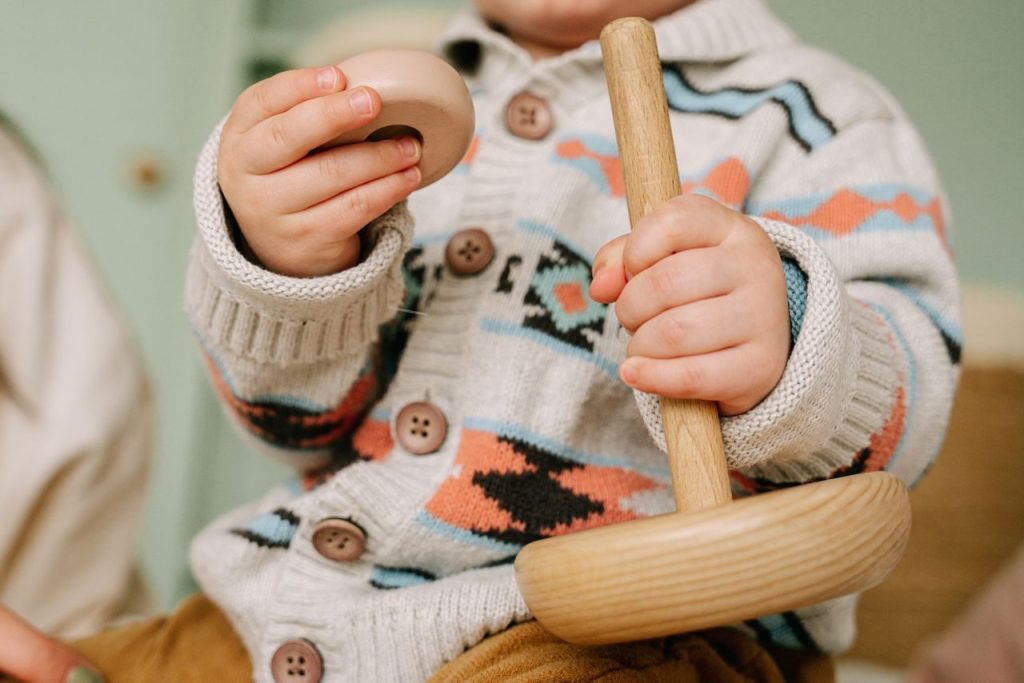
Babies and toddlers are interested in the objects adults use. That interest does not make every household item an appropriate toy. Before offering something, consider its intended use, parts, material and condition. Keep medicines, cleaning products, batteries, cords and small objects separate from play. A familiar container can still introduce a hazard, and a product described as natural is not automatically suitable for a child to handle or put near their mouth.
The practical question is what the child can actually reach and do with the object. An adult may think of a lid as packaging, while a child treats it as something to explore. Do not rely on explaining that an object is not for eating as the main safety arrangement for a very young child. Selection and supervision are adult responsibilities. A play idea should not depend on a child resisting every interesting unsuitable feature in the surrounding room.
Review the object as a whole
Look for loose parts, sharp damage, strings and openings or features that raise questions. Avoid adding household objects to a sensory box simply because a list praises exploration. Loose rice, small pieces and improvised fillers can create hazards. A homemade activity does not receive a safety guarantee from its handmade appearance. If you are unsure about an item, choose an appropriate manufactured play object or a shared activity that does not require introducing the uncertain material.

Keep components together with their actual purpose. A battery compartment or fastening should not be altered to make an object more interesting. Packaging is not equivalent to a toy, and a container used for a chemical or medicine should not be repurposed as a child's play item. Washing it does not establish suitability. The safest next step when important information is missing is often to leave the object out, rather than create a cleaning or repair method designed to justify using it.
Offer interaction without a pile of props
You can share looking, talking, copying an ordinary sound or reading a suitable book without a collection of household objects. Choose an activity that allows the adult to remain responsive. If the child is interested in a safe everyday task, describe what you are doing while keeping the objects that are unsuitable out of reach. Observation can be part of participation; the child does not need to hold every tool to be included in ordinary family life.
For toys and books, use their intended age and safety information and check condition. This is different from claiming that every marketed educational item is necessary. A manageable selection allows repeated play and attention to the child's interest. Avoid turning the interaction into a test of how many textures or objects the child explores. No general list can promise a developmental outcome, and more elaborate materials do not automatically make the shared moment more useful or appropriate.
Keep the environment understandable
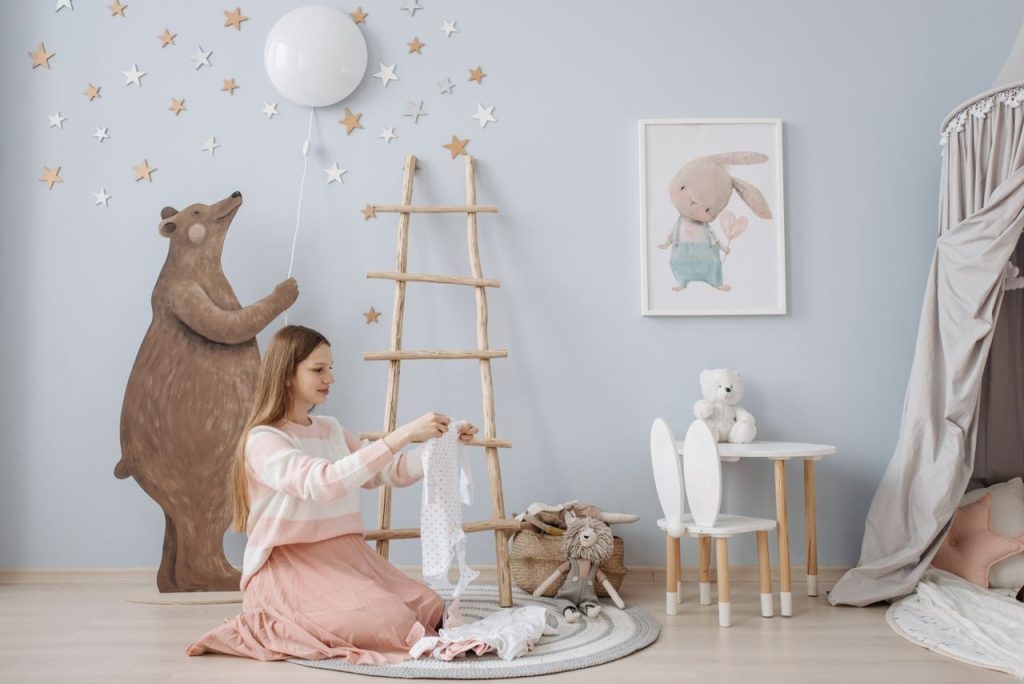
Separate adult task areas from the space being used for play. When several people share a room, agree where loose items go. An older child's craft materials or an adult's desk supplies may need a different storage arrangement. The answer is not simply to ask the younger child to stay away. A clear environment reduces repeated interruption and makes it easier for the responsible adult to supervise without constantly removing unsuitable items that never needed to be within reach.
If another carer takes over, identify what is available and what must remain separate. A vague instruction that the room is safe does not explain the boundaries. Do not leave an uncertain object in the play collection because you expect the next adult to recognise the issue. A brief handover can preserve the practical arrangement without becoming surveillance or a long argument about parenting. The aim is shared understanding of the actual space and materials being used that day.
Reset after the activity
Return adult items to their appropriate storage and check play objects for damage. Keep cleaning consistent with product instructions rather than using an improvised stronger mixture. The reset does not need to become an elaborate project, but it should prevent the next activity from beginning with leftovers, packaging and small components hidden among suitable toys. If a concern arises, address it separately instead of making a cosmetic repair and assuming the object is ready because the area looks tidy again.
Everyday curiosity can be welcomed without declaring all everyday objects safe. Adults can provide attention, language and suitable play materials while maintaining boundaries around hazards. The goal is not maximum novelty or a perfect sensory experience. It is a manageable interaction in which the child can explore appropriate choices and the adult knows what is available. Leaving an uncertain household object out is not depriving the child of learning; it is a reasonable decision about what belongs in this particular activity.