Read the warning before the marketing
A toy's packaging may emphasise enjoyment, learning and a broad age range. Start with the actual intended-use and safety information, not only the picture on the front. Keep the model identifiable and read relevant instructions. An age label is useful context, but it does not tell you everything about an individual item, its condition or how it will be used in your home. The adult still needs to select and supervise appropriately.
Separate a safety warning from a developmental sales claim. A promise that a toy encourages a particular skill does not establish a guaranteed outcome for your child. Likewise, suitability is not proved by a photograph showing a child of a similar apparent age. Read the words and the product details. If the information is unclear or inconsistent, ask the manufacturer or retailer rather than replacing it with an assumption based on how popular or expensive the item appears.
Consider parts that can become accessible
Small parts, loose batteries and damaged components deserve attention. The CPSC's toy safety material explains small-part concerns for young children, but US regulatory details should not be treated as a complete statement of Dutch requirements. For your practical check, identify the item, use its instructions and look at its current condition. A new-looking object may still have a loose feature, and a familiar one can change with wear.
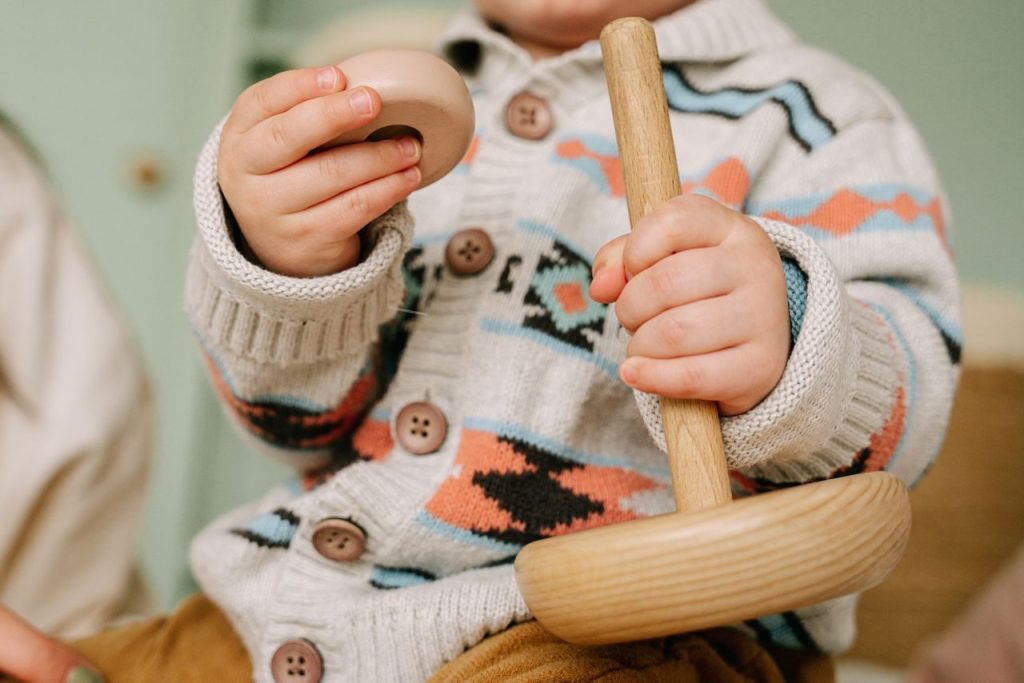
Keep packaging, spare components and other household objects out of play unless they are appropriate for that purpose. Do not create a home pass-or-fail safety test using an improvised measuring tool and then certify the toy. If there is damage or uncertainty about a component, remove it from use while obtaining appropriate guidance. A general guide cannot establish safety by appearance, and a child should not be used to see whether a questionable part stays attached during play.
Match the intended use to the setting
Think about where the toy will be used and which adult is responsible. A product intended for one setting may not suit another. Sound, movement and small accessories can also affect how manageable it is in a shared space. Read instructions about assembly, power and care. If a setup requires an adult task, arrange it before play rather than leaving loose pieces available while the child explores and the responsible person searches for a tool or battery.
Consider other children in the room. An older child's suitable toy may not be suitable for the younger child who can reach it. Store items accordingly and make the arrangement understandable to the household. This is a practical separation of access, not a judgement on the older child. They should not carry the whole responsibility for preventing a younger child from finding small pieces, especially when the shared room and storage system have never been organised to make that expectation realistic.
Keep product information available
Retain enough identity and documentation to check a concern later. You do not need an elaborate archive for every object, but model or batch information can matter when a warning appears. Use original manufacturer or applicable official information to establish scope. A forwarded headline about a brand does not prove that every item is affected. Conversely, not finding a warning does not guarantee that an individual toy is complete, suitable or in good condition.
If you contact a manufacturer, describe the item and observed problem. Do not repeat a dangerous event to obtain clearer evidence. Keep the response distinct from your interpretation and follow the relevant instructions. Avoid DIY repairs that change the product's intended condition or create a new hazard. A decorative fix can conceal the question without answering it, leaving another carer unaware that the object was damaged and that its documented use has not actually been restored.
Let selection end without a purchase
Choose toys around actual interest, space and suitable use rather than the claim that every age needs another category. A small selection can be enough for varied interaction. You may decide to wait for clearer information or use something already available. That is a meaningful outcome. A comparison should not force a winner when documentation, condition or an unresolved question prevents you from understanding how an item would fit your family's ordinary play.
Reading a label is the beginning of an informed choice. Keep intended use, accessible parts, condition and supervision together. The aim is not to become a product laboratory or turn every play session into a safety inspection. It is to notice important information before marketing takes over the decision and to keep uncertainty visible. A toy should support an appropriate activity, not require the adult to ignore a warning because a picture, review or promise made the purchase feel essential.
Further reading: CPSC: toy safety information.