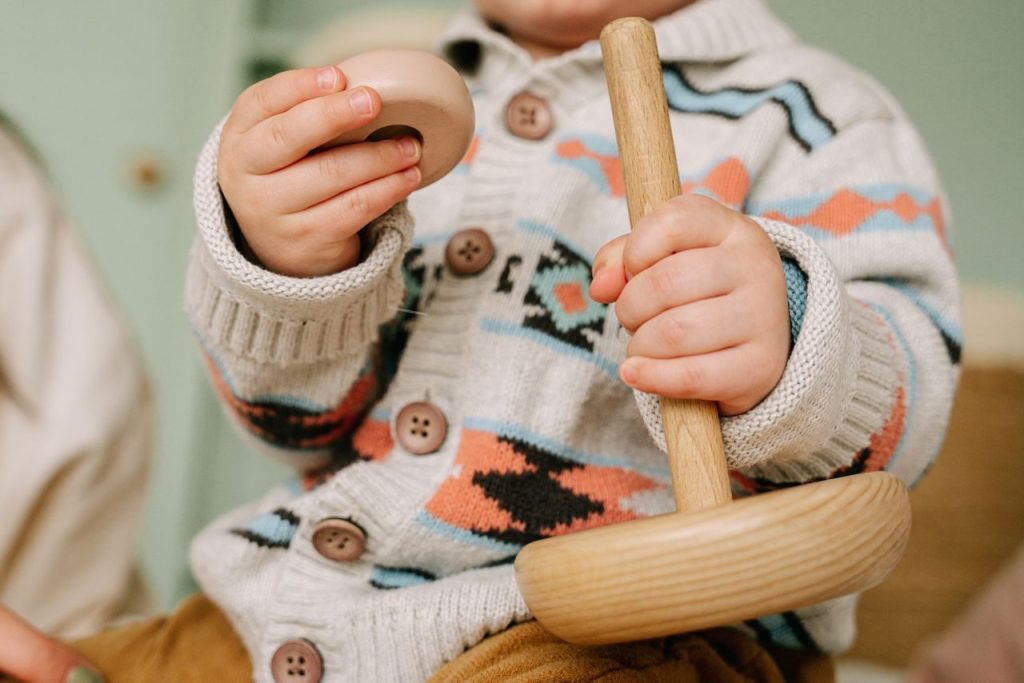
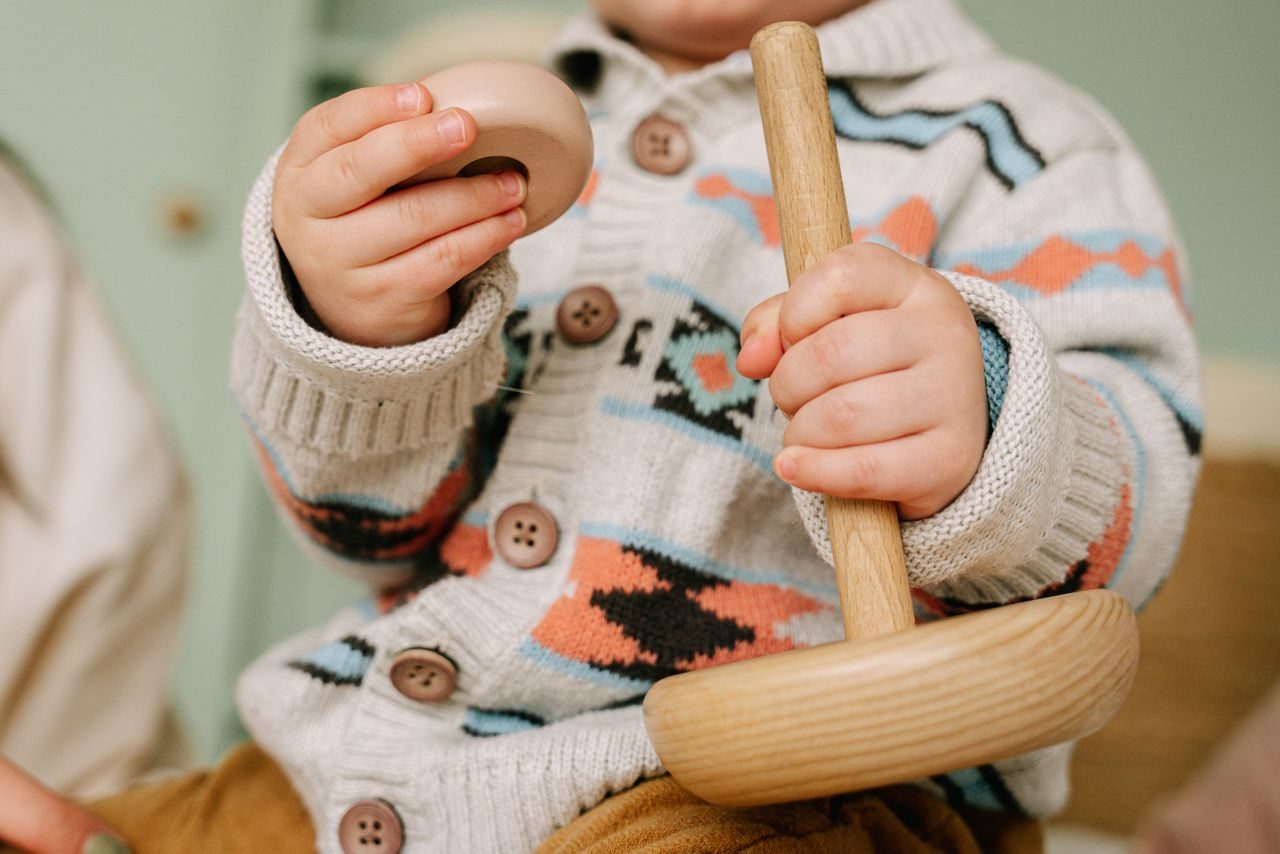
Parents often weigh whether to reach for a purpose-made toy or an everyday household object when setting up a short play moment. Both options appear in daily routines, yet each brings distinct qualities that affect how long a child stays engaged and how easily the adult can supervise.
Observation during these moments shows patterns that repeat across different homes. A baby may spend several minutes turning a wooden spoon, while the same child loses interest more quickly in a brightly coloured ring stack. The choice between the two depends on the immediate setting, the child’s current stage and the time available before the next task.
Texture and weight differences in early grasping
Household objects such as a clean plastic cup or a wooden spatula offer varied textures and weights that change slightly with each grasp. A dedicated teething ring usually presents one consistent surface. Watching how a baby rotates an object reveals whether the variation holds attention or whether the single texture prompts quicker release.
At the stage when babies begin to bring objects to the mouth, firm, smooth household items require the same close watching as any toy. A metal spoon needs checking for temperature before use, whereas a silicone ring stays at room temperature. Both need inspection for damage before each session.
Noise levels during brief floor time
Some household objects produce a single clear sound when tapped, while many commercial toys contain multiple rattles or buttons. In a small room, the simpler sound may allow an adult to continue a conversation nearby without added volume. Recording which objects prompt repeated tapping helps decide what to keep within reach for the next day.
Toddlers around two years sometimes prefer the predictable sound of two wooden spoons struck together over an electronic toy that plays tunes. The repetition itself appears to sustain interest longer when the sound remains consistent rather than changing with each press.
Storage and immediate availability
Everyday objects already sit in kitchen drawers or on low shelves, so they require no extra container. Dedicated play items often need a basket that must be carried from room to room. When time between tasks is short, the object already in the room reduces the steps needed to begin play.
Rotating a few household items daily avoids the visual clutter that can appear when many toys remain visible. A single clean cloth or empty box can be swapped for another object after one use, keeping the floor space clear for movement.
Supervision demands across stages
Before a baby sits steadily, any object on the floor needs an adult within arm’s reach. Once sitting is reliable, the same items can stay on a low tray while the adult prepares a meal nearby. The change in supervision distance follows the child’s increasing stability rather than the type of object chosen.
Toddlers who walk short distances may carry a small household item from one surface to another. A dedicated stacking cup set stays in one place more often. Observing which pattern matches the day’s energy level guides the choice for that session.
Cleaning between uses
Most household items withstand hot soapy water or a dishwasher cycle without special instructions. Many commercial toys carry surface-only cleaning guidance. When play happens several times a day, the quicker cleaning route influences which objects appear more frequently.
Checking each item for cracks or loose parts remains necessary regardless of origin. A chipped wooden spoon is set aside in the same way as a cracked plastic ring.
Combining both options in one session
Some families place one household object and one simple toy side by side for a few minutes. The child may move between them without adult direction. Watching the sequence shows whether the child returns to the same item or alternates, giving a practical indication of what to prepare the next time.
Keeping the total number of objects low prevents the need to clear a larger area when the session ends. Two or three items usually suffice for the length of time most young children maintain focus before needing a change of activity.
Adjusting choices as mobility increases
Once crawling begins, objects that roll short distances can extend the reach of play without requiring the adult to move them. A small metal lid may travel farther than a fabric block. The adult’s role stays limited to ensuring the path remains clear and the object stays within sight.
By the time walking is steady, the same household objects can be placed on a low step or stable stool for reaching practice. Dedicated items with wheels sometimes require more floor space, which may not suit every room layout.
Regular review of which objects remain in use helps keep the selection small and functional. Items that no longer hold attention for even a few minutes can be stored away until a later stage, while the current favourites stay accessible.